
Anchor
“So, whether you eat or drink or whatever you do, do it all for the glory of God.”— 1 Corinthians 10:31 (NIV)
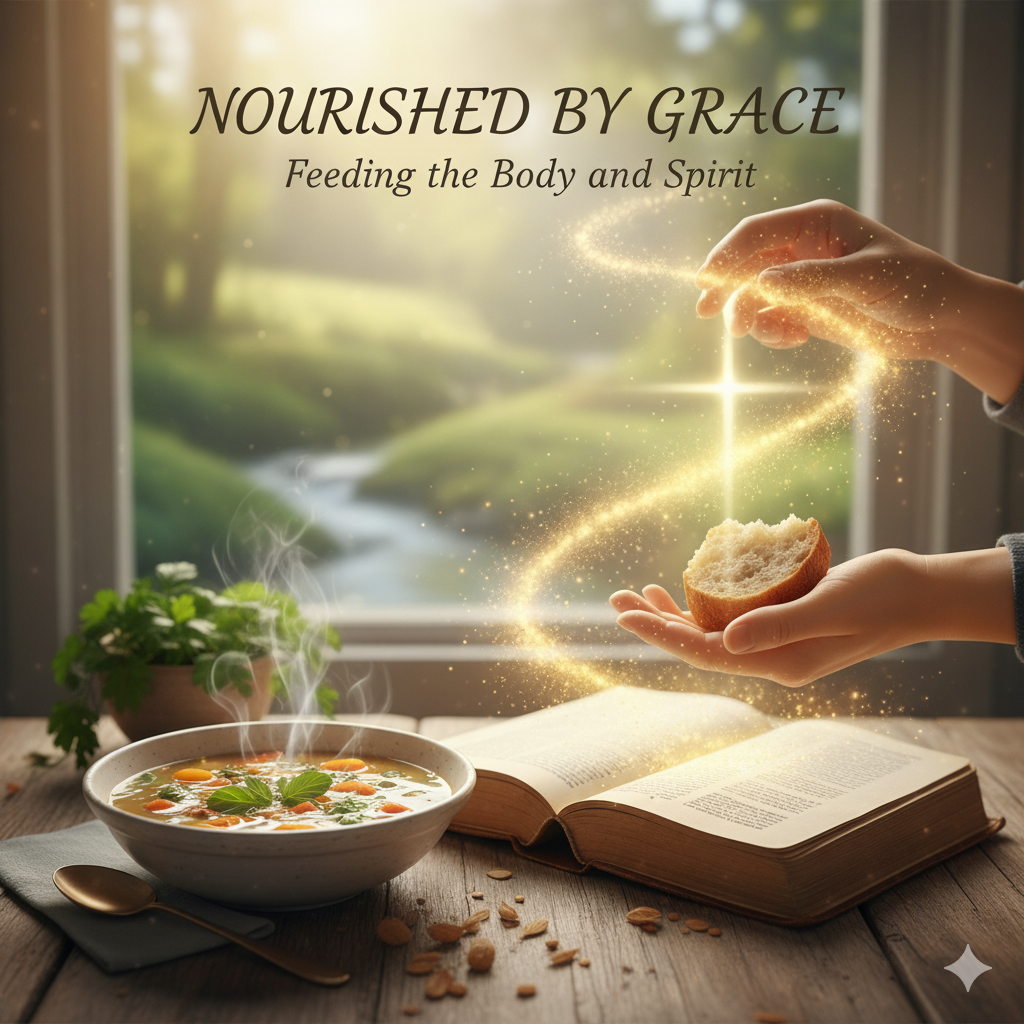
This verse transforms something as simple as eating into something sacred. Nourishment is not only about calories and nutrients, but also about gratitude, stewardship, and grace. Every meal becomes an opportunity to honor the God who provides.
There was a season when food was simply fuel for me. Something to grab before class, between meetings, after school activities, or ministry work. But as I began walking The P.E.A.C.E. Path™, I realized that how I ate reflected how I lived. Rushed meals mirrored a rushed mind. Skipped meals reflected skipped moments of self-care. When I began to slow down, pray, and truly taste, I discovered that eating could be sacred. Preparing a meal became a moment of peace. Sharing one became a ministry. Nourishment, I learned, was not routine, it was restorative.
The Spiritual Side of Nourishment
God cares deeply about how we nourish our bodies because it affects how well we serve. When we eat with intention and gratitude, our meals shift from necessity to worship. In Scripture, food often carries divine meaning: manna in the wilderness, bread broken at the Last Supper, and even the invitation of Jesus to “come and eat.” Food connects us to creation, community, and the Creator Himself. Nourishment is not just physical, it’s emotional and spiritual. Grace feeds all three.
Faith Meets Science
Public health research confirms what Scripture teaches: balanced nutrition improves focus, energy, and mood. The Centers for Disease Control and Prevention (CDC) emphasizes that consistent, nutrient-rich meals strengthen immunity and support mental health. Harvard Health studies show that mindful eating lowers stress and improves digestion by engaging the body’s relaxation response.
But science only explains part of the story. Spiritual wellness teaches that how we eat matters as much as what we eat. Gratitude heals our relationship with food and with ourselves. When we eat prayerfully, we move from guilt to grace, and from hurry to harmony.
This understanding inspired TPP ’s Peaceful Bowls Recipe Book, created to feed both body and spirit. Each recipe is simple, nourishing, and mindful, reminding us that the kitchen can become a sanctuary, and the table a place of transformation.
Practical Practice: Make a Meal Sacred
This week, choose one meal and make it a sacred moment:
- Pray before you eat—thank God for the food, the hands that prepared it, and the gift of health
- Turn off distractions and slow down. Notice the colors, textures, and flavor.
- If you feel weary, cook one recipe from The Peaceful Bowls Recipe Book or create your own inspired version
As you chop, stir, and savor, let the rhythm of preparation remind you of God’s creative rhythm at work in you.
Pause and Ponder
How can I use food this week to nourish not just my body but also my soul?
Be Encouraged
You were created to thrive, not just survive. Every meal is an invitation to experience God’s grace. When you eat with peace and gratitude, you transform your table into a place of worship. Feed your body well and your spirit even better. Remember, you are nourished by grace, one meal, one prayer, and one peaceful moment at a time.
Take Action
This week, commit to one intentional meal a day. Reflect on how gratitude and mindfulness change your energy and peace. Visit The P.E.A.C.E. Path™ website to explore the Peaceful Bowls Recipe Book featuring meals that make wellness simple, sacred, and delicious.
APA-Formatted References
Centers for Disease Control and Prevention. (2023). Healthy eating for a healthy weight.
Retrieved from https://www.cdc.gov/healthyweight/healthy_eating/index.html
Harvard Health Publishing. (2023). How mindful eating can help you live better. Harvard Medical School. Retrieved from https://www.health.harvard.edu/mind-and-mood/how-mindful-eating-can-help-you-live-better
National Institutes of Health. (2022). Nutrition and healthy eating. National Heart, Lung, and Blood Institute. Retrieved from https://www.nhlbi.nih.gov/health/nutrition
The Holy Bible, New International Version. (2011). 1 Corinthians 10:31. Biblica, Inc.
Comments are closed