
Anchor
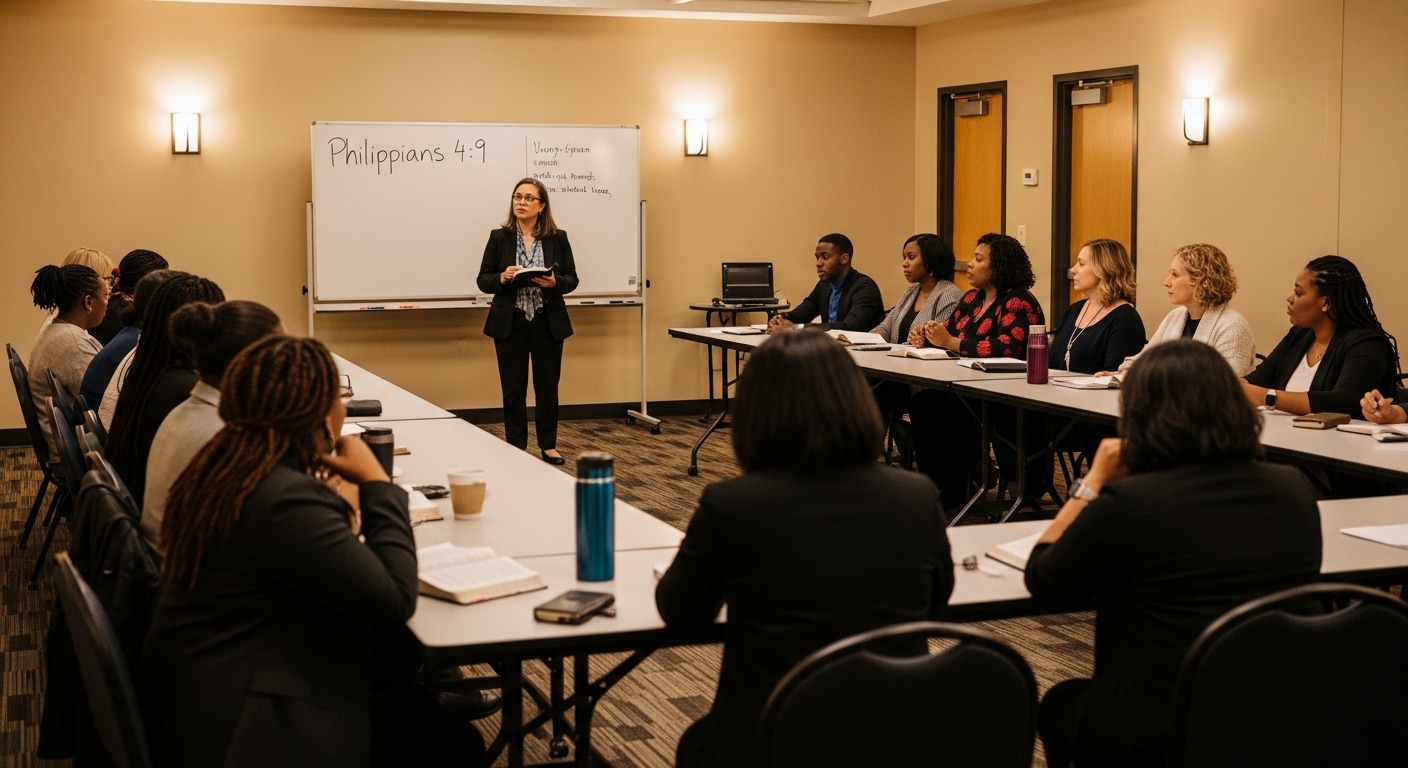
“The things which you learned and received and heard and saw in me, these do, and the God of peace will be with you.”— Philippians 4:9 (NKJV)
This verse reminds us that peace isn’t passive, it’s a practice. Paul was teaching that when we walk in what we’ve learned and live out what we know, peace follows. Peace isn’t the absence of problems; it’s the presence of alignment with God. Purpose doesn’t rush in during chaos it becomes clear in calm. When our hearts are still and our minds are centered, we can hear God’s direction more clearly. Purpose and peace are partners on the same path.
I remember a season when life was full, ministry, parenting, work, and doctoral research. I prayed for clarity, but what God gave me first was calm. When I began walking in peace, slowing down, praying more, and trusting the process. That is when purpose unfolded naturally. God revealed that direction comes after surrender. Peace is the soil where purpose grows. When we choose calm over chaos, focus over frenzy, and surrender over striving, we become available for divine direction.
The Spiritual Side of Purpose
Peace is not a reward it’s a requirement! Scripture teaches that when we align our hearts with God, His purpose becomes our compass. The calm heart hears clearly; the anxious heart reacts quickly.
Jesus modeled this rhythm throughout His ministry. He paused before choosing His disciples, prayed before performing miracles, and rested before returning to teach. His peace was His strategy.
When our hearts are anchored in stillness, we become sensitive to the Holy Spirit’s guidance. In that space, decisions align with discernment, and purpose flows naturally from peace.
Faith Meets Science
Research continues to affirm the timeless truth that peace brings clarity. Studies from Johns Hopkins Medicine and the National Institutes of Health (NIH) reveal that chronic stress narrows focus and impairs decision-making, while mindfulness and spiritual reflection enhance creativity, emotional regulation, and cognitive flexibility.
The American Psychological Association (APA) also notes that intentional rest and meditation lower cortisol, improve clarity, and support better long-term decisions. In both science and faith, stillness is seen as a source of strength and not stagnation.
That’s why The P.E.A.C.E. Path™ centers on prayer, exercise, and continuous energy (rest). Together, these create spiritual and physiological balance, quieting the internal noise so that divine wisdom can rise to the surface. Purpose doesn’t shout it whispers through peace.
Practical Practice: The Peace-First Decision Check
Before saying “yes” to new commitments or decisions this week, pause and ask:
- Am I moving from peace or pressure?
- Is this driven by purpose or by fear of missing out?
- Does this choice make room for God’s presence or crowd it out?
Take five minutes daily for reflection. Breathe deeply, pray for guidance, and write what comes to your spirit. You’ll find that peace and purpose never compete—they cooperate.
Pause and Ponder
What happens when I let peace guide my decisions rather than pressure or fear?
Be Encouraged
You don’t have to chase purpose because it will meet you in peace. God’s will is not hidden, it is heard best in stillness. As you walk The P.E.A.C.E. Path™, remember that peace is not just a feeling, but it is our guidance mechanism. Let peace guard your heart, clarify your purpose, and direct your next step. When you lead with peace, purpose will always follow.
Take Action
Practice one peaceful pause each day this week.
- Start with deep breathing or prayer.
- End by asking God to show you where He’s leading next.
Then visit The P.E.A.C.E. Path™ website for guided reflections and tools to help you align your purpose with His peace.
APA-Formatted References
American Psychological Association. (2023). Stress effects on the body. Retrieved from https://www.apa.org/topics/stress/body
Johns Hopkins Medicine. (2022). Meditation: A simple, fast way to reduce stress.
Retrieved from https://www.hopkinsmedicine.org/health/wellness-and-prevention/meditation-a-simple-fast-way-to-reduce-stress
Mayo Clinic Staff. (2023). Mindfulness exercises: Learn how to be present. Mayo Foundation for Medical Education and Research. Retrieved from https://www.mayoclinic.org/healthy-lifestyle/consumer-health/in-depth/mindfulness-exercises/art-20046356
National Institutes of Health. (2023). Stress management: Enhance your well-being by reducing stress. National Center for Complementary and Integrative Health. Retrieved from https://www.nccih.nih.gov/health/stress
The Holy Bible, New King James Version. (1982). Philippians 4:9. Thomas Nelson.
Comments are closed